
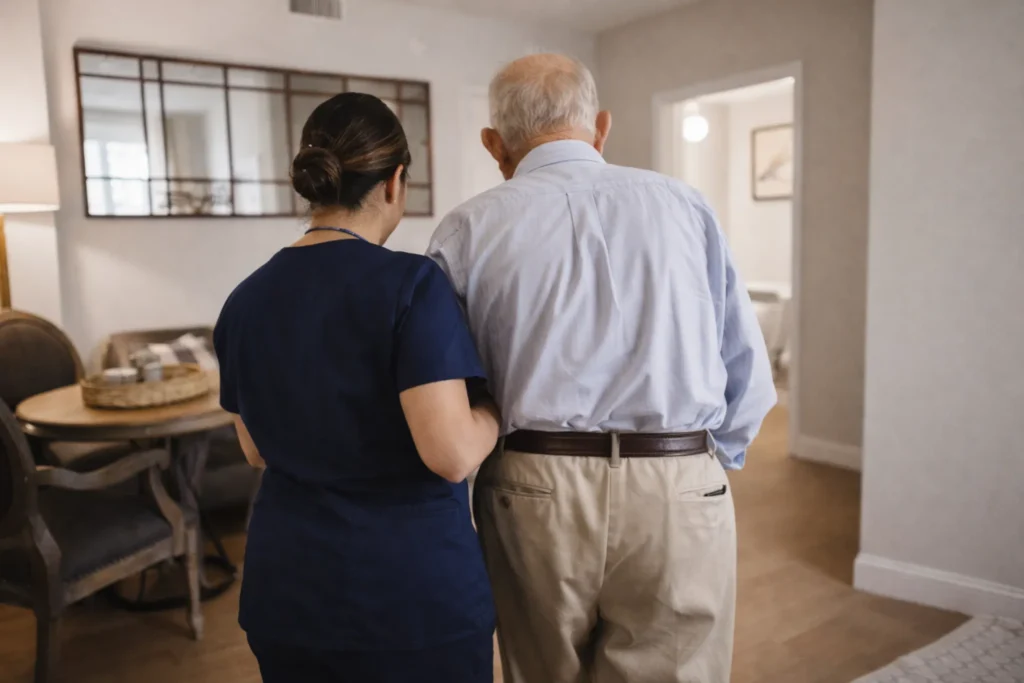
There is usually a moment when families begin looking into senior living. It might be after a second fall in six months. It might be when the mail is piling up, the fridge is half-empty, or a once-social parent now spends most days alone. Sometimes it is quieter than that. A simple sentence at the kitchen table. “I’m just tired.”
Families do not explore assisted living because everything is going smoothly. They start looking because they want life to feel steadier, safer, and more manageable. If you are asking whether assisted living would truly make a difference, you deserve a clear and honest answer.
Understanding Assisted Living: What It Really Means
Assisted living is designed for older adults who want to remain independent but need support with certain daily activities. It bridges the space between living fully on one’s own and requiring more advanced care like memory care or skilled nursing. Residents typically receive help with bathing, dressing, and medication management. Meals are prepared. Housekeeping is handled. Staff members are present around the clock.
It is not a hospital setting, and it is not about taking control away. It is about reinforcing independence safely. Residents maintain their routines, preferences, and personal choices, while receiving support where it is genuinely needed. That balance is what makes assisted living different from simply aging alone at home.
Safer Daily Living Without Sacrificing Dignity
One of the most immediate benefits of assisted living is safety. Falls remain one of the leading causes of injury among older adults, and medication errors are more common than many families realize. Even something as ordinary as a dim hallway or loose rug can create real risk.
Assisted living communities are intentionally designed with safety in mind. Bathrooms include grab bars. Walkways are well-lit. Emergency response is available day and night. Medications are monitored carefully, reducing the chance of missed doses or harmful combinations.
Support is offered discreetly. If a resident needs help fastening a shirt or steadying themselves in the shower, that assistance is provided respectfully. They still choose what to wear. They still decide how to spend their afternoon. Safety and independence are not opposites. When done well, they strengthen each other.
For families, this often brings an unexpected sense of relief. The late-night worry eases. The constant monitoring softens. You can return to being a son or daughter, not just a caregiver.
Freedom From Household Burdens
Maintaining a home does not become easier with age. Cooking, cleaning, yard work, laundry, repairs, bills. These tasks require energy and coordination, and they can quietly drain both.
In assisted living, those responsibilities shift. Meals are prepared consistently and with attention to nutrition. Laundry is returned folded. Maintenance concerns are addressed promptly. Residents no longer have to worry about climbing ladders or lifting heavy grocery bags.
The time and energy once spent on upkeep can be redirected toward staying active and engaged. Residents attend book clubs, participate in social events, enjoy movie nights, or take part in physical activities designed to support strength and mobility. Instead of managing a household, they are free to focus on living. That shift often leads to improved physical health and a noticeable lift in mood. When daily strain decreases, quality of life tends to rise with it.
Built-In Social Connections That Reduce Loneliness
Social isolation is more than an inconvenience. It is linked to depression, cognitive decline, and worsening physical health in older adults. Living alone, especially after losing a spouse, can make days feel very long.
One of the most meaningful benefits of assisted living is the built-in opportunity for social interaction. Shared meals create natural connection points. Casual hallway conversations become routine. Social events, group discussions, and creative gatherings encourage engagement without pressure.
Residents can choose how involved they want to be. Some prefer lively activities. Others enjoy quieter conversations over coffee. The important thing is that connection is available. Social connections form naturally when people see each other daily.
Families often notice the difference quickly. A parent who once seemed withdrawn may begin talking about a neighbor they enjoy sitting beside at dinner. That sense of community reduces loneliness and contributes significantly to overall quality of life.
Personalized Care That Evolves Over Time
Aging is not static. Needs shift gradually, sometimes subtly. One of the practical benefits of assisted living is flexibility. Care services are tailored to each individual. If a resident requires minimal support at first, that is what they receive. If their health changes, assistance increases accordingly. This adaptability prevents crisis-driven decisions. Waiting too long to make a move often leads to emergencies that force sudden transitions. A fall, a hospitalization, or signs of memory loss can create stress for everyone involved.
Planned moves allow older adults to settle into a community gradually. Staff members learn personal routines and preferences. Small health changes are noticed early. Communication with residents and their families remains steady. For individuals who may later require memory care, remaining within the same senior living organization can ease that transition and reduce emotional disruption.
Improved Quality of Life for Residents and Their Families
Perhaps the most profound benefit of assisted living is the shift in family dynamics. When adult children step into full-time caregiving roles, relationships often change. Conversations revolve around medications, appointments, and reminders. Frustration can creep in on both sides.
Assisted living allows families to step back into their original roles. Visits become about connection again. Shared meals feel relaxed. Time together is less about managing tasks and more about enjoying each other’s company.
Residents experience a more predictable daily rhythm. Meals happen consistently. Physical activities support strength and balance. Social interaction becomes part of everyday life rather than something that requires planning and transportation.
Quality of life does not mean every day is perfect. Some days are still hard. But consistent care, emotional support, and a sense of community create stability. Stability allows people to breathe a little easier.
When Is Assisted Living the Right Choice?
Many families struggle with timing. Signs that it may be time include difficulty managing daily activities, missed medications, repeated hospital visits, increasing social isolation, or noticeable changes in physical health. Caregiver burnout is also a real and valid concern.
If you find yourself asking the question repeatedly, it is worth exploring options. Moving before a crisis allows seniors to participate in the decision and maintain a sense of control. The right time rarely announces itself clearly. It usually arrives quietly.
What to Look for When Visiting Communities
When touring assisted living communities, pay attention to the atmosphere. Observe how staff members interact with residents. Notice whether people appear engaged. Ask about how care plans are developed and adjusted.
Look beyond the brochure. Watch the details. They tell the real story.
You are not just choosing services. You are choosing an environment where your loved one will live.
How Cura Living Approaches Assisted Living
At Cura Living, we believe compassionate care begins with listening. Every resident arrives with a lifetime of experiences, traditions, and preferences. Our responsibility is to honor that individuality while providing steady support.
We operate along the East Coast with a small-company mindset. Personalized attention matters to us. For example, we offer kosher dining that reflects cultural responsiveness where it is meaningful. Across our communities, programming reflects local identity and the interests of the people who live there.
We do not simply fill positions. We invite companions who understand that emotional support is as important as physical assistance. Our focus is holistic well-being. Physical health. Emotional stability. Social connections. A renewed sense of purpose.
If you are considering assisted living for someone you love, the next step is simple. Schedule a visit. Spend time in the common areas. Sit in on a social event. Ask about care services and how they adapt over time. See how residents interact with one another.
When you are ready, reach out to learn more about our assisted living communities. We would be honored to answer your questions and help you decide what comes next for your family.