
There’s a question almost every family asks after the paperwork and the tour. After the hard decision is made. What will Mom actually do all day?
It’s an honest question, and it matters more than people realize. Hobbies in memory care are not about keeping residents busy. They are about protecting identity, supporting cognitive function, easing anxiety and agitation, and giving structure to days that might otherwise feel long and confusing. In the right setting, activities are not filler. They are anchors. If you are exploring memory care for someone you love, here is what you should know.
Why Hobbies Matter in Memory Care
Memory loss changes the shape of a day. Conversations shorten. Routines disappear. Confidence can shrink. What does not disappear is the human need to feel useful.
In strong memory care communities, hobbies are built into the daily rhythm because purposeful activities improve mood and reduce anxiety. Research continues to show that engagement supports cognitive function in dementia patients. It does not cure Alzheimer’s. It does not reverse decline. But it can slow withdrawal. It can steady emotions. It can make a Tuesday feel different from a Thursday. That difference matters.
When people live with dementia, predictability becomes calming. A thoughtful memory care program does not overload residents with constant stimulation. It offers structure with intention.
How Hobbies Support Cognitive Function
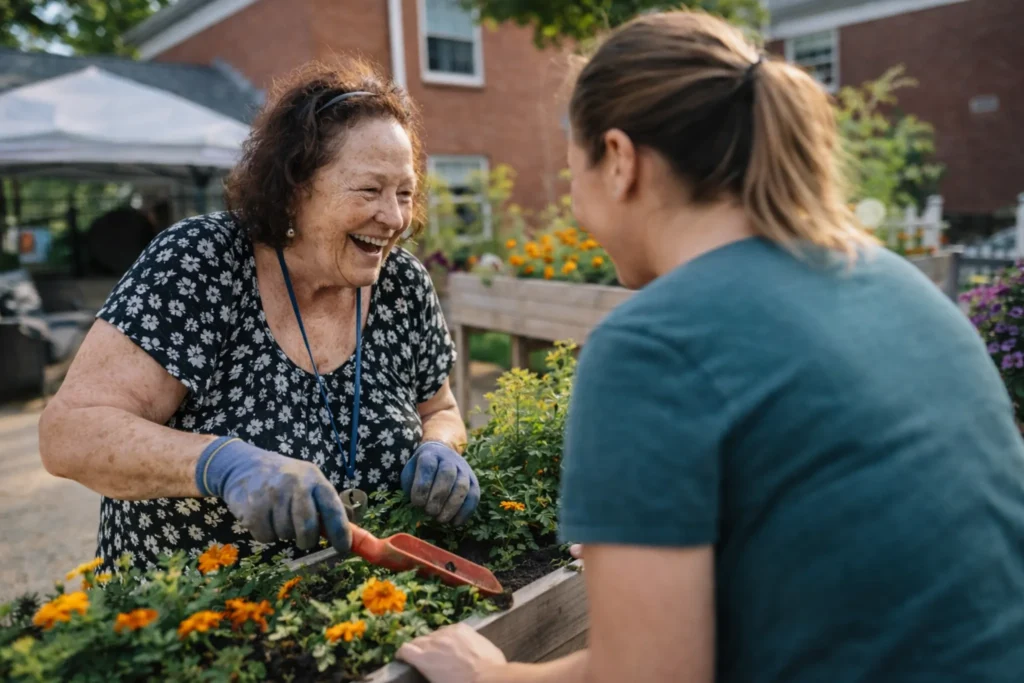
The brain often holds onto long-term memories even as short-term recall fades. That is why familiar hobbies are so powerful. A former gardener may not remember breakfast, but she remembers how soil feels in her hands. A retired teacher may struggle to follow a long conversation, but he lights up when reading aloud to a small group. These are not random activities. They are carefully chosen to activate areas of the brain that remain strong.
Music therapy is especially meaningful in memory care communities. Songs from early adulthood often unlock memories that feel otherwise out of reach. Staff members have seen residents who rarely speak suddenly sing every word to a song from their twenties. The melody carries them somewhere familiar. Music reaches places language sometimes cannot.
Creative Activities Without Pressure
In memory care, success is not measured by the finished product. It is measured by engagement.
Creative activities like watercolor painting or simple arts and crafts projects give residents space to express themselves without fear of getting it wrong. There is no grade. No critique. Just color on paper, hands moving, eyes focused. That freedom preserves dignity and respect. It reinforces autonomy at a stage of life when so much can feel out of one’s control.
Reminiscence activities are equally powerful. Memory boxes filled with photographs. Story circles guided gently by staff members. Conversations sparked by familiar objects. These moments say something important: your history still matters here.
Reducing Anxiety and Agitation Through Purposeful Activities
Anxiety and agitation are common in memory care communities. Confusion can create restlessness. Idle time can amplify it. The right hobbies can settle that storm.
Repetitive, soothing tasks often work best. Folding warm towels. Sorting cards. Shelling peas in the kitchen before lunch. Knitting simple rows. The motion itself becomes calming. There is comfort in repetition. In knowing what comes next.
Physical activity also plays a role. Gentle walks along secured garden paths, chair yoga sessions, light stretching to soft music. Movement supports circulation and helps regulate sleep patterns. It improves mood. It reduces anxiety.
The goal is not intensity. It is consistency.
Safety Without Restriction
Family members often worry about safety, which is a valid concern, but one we work hard to assuage. Well-designed memory care communities build hobbies around thoughtful safeguards. Outdoor spaces are secured yet open to sunlight. Raised garden beds prevent strain. Art supplies are non-toxic. Tools are adapted with soft grips and close supervision. Safety does not mean limitation, it simply means designing an environment where residents can move freely within appropriate boundaries. When staff members are trained specifically in dementia care, they recognize early signs of frustration and gently redirect before anxiety escalates. That quiet attentiveness makes all the difference.
Social Interaction That Feels Natural
Social interaction supports emotional health, but large, noisy gatherings can overwhelm dementia patients. Smaller groups tend to work better. A domino game at a round table. A simple card game with modified rules. Trivia centered around music or historical events residents remember clearly. In these settings, conversation feels manageable. Participation feels possible.
Shared projects also build connection. Baking cookies together. Decorating for holidays. Creating a mural that hangs in the hallway. These activities encourage residents to contribute without pressure. In strong memory care communities, staff members are not distant supervisors. They sit down. They listen. They laugh. We often say we do not hire staff, we invite companions. That mindset shapes how residents experience their day.
How Activities Evolve Across Senior Living
In independent living, residents often take the lead. They form book clubs, coordinate volunteer efforts, and host cultural gatherings. Autonomy is central. For those who observe kosher dining or other cultural traditions, communities like ours in Boca integrate those practices into daily life with respect and responsiveness.
In assisted living, more guidance is offered while preserving choice. Creative activities, light exercise classes, and hobby groups are structured but flexible. In memory care, structure becomes even more intentional. The level of support increases, but dignity and individuality remain at the forefront. Across all levels of senior living, the purpose is the same. Support the whole person: physical health, emotional stability, spiritual care, and connection.
A Day in a Thoughtful Memory Care Program
Imagine the rhythm of a well-designed day. Morning coffee with soft music in the background. A staff member joins a table, not to monitor, but to chat about the weather or last night’s baseball score. Mid-morning arts and crafts. Paintbrushes move slowly across paper. Someone laughs when colors blend unexpectedly.
Lunch features familiar recipes. The smell alone sparks conversation.
Afternoon brings time in the courtyard. Residents water plants or sit in the sun while a gentle breeze moves through. Evening closes with music therapy. Old songs fill the room. A few residents tap their feet. One hums softly. This is not staged entertainment. It is rhythm, structure, and life continuing, even as memory shifts.
How Families Can Support Engagement
When a loved one transitions into memory care, your involvement still matters.
Bring items that reflect who they are. A knitting basket. A well-worn cookbook. A favorite record. Share their life story with staff members. Tell us about their career, their hobbies, their faith traditions. The more we understand, the more personalized the experience becomes. Visit during activity times if you can. Sit beside them. Join in. Your presence reinforces familiarity. These small steps help bridge the old routine with the new one.
What to Look for When Touring Memory Care Communities
As you explore memory care communities, look beyond the printed activity calendar.
Observe the room. Are residents engaged or simply seated? Do staff members interact naturally? Is physical activity woven into the day? When someone seems overwhelmed, how do caregivers respond? Quality is visible in the details. In the best environments, activities feel integrated into daily life rather than scheduled as afterthoughts.
The Bigger Picture
Hobbies in memory care are about more than passing time. They support cognitive function, improve mood, reduce anxiety, and strengthen social interaction. Most importantly, they restore a sense of purpose. Memory loss may change how someone participates. It does not erase their need for dignity, connection, and meaningful days. That truth guides our work.
How Cura Living Approaches Engagement
At Cura Living, we believe compassionate care begins with knowing the individual. Every resident arrives with a lifetime of stories. Our responsibility is to listen. We are growing along the East Coast, and we hold onto a small-company mindset. Personalized attention matters. Cultural and religious traditions are honored where available. Staff members are chosen for skill and heart. Employee culture shapes resident experience. In our memory care program, hobbies are shaped around who someone has always been. We focus on holistic well-being because treating only one part of a person misses the point.
If you are considering memory care communities for someone you love, the next step is simple.
Schedule a visit. Spend time in the common areas. Ask how we tailor creative activities. Ask how we reduce anxiety and agitation. Notice whether residents seem known, not managed. Then, talk with us about your family’s needs. Reach out to Cura Living to learn more about our senior living options, including assisted living and memory care communities. We would be honored to walk you through what daily life looks like and help you decide what comes next.