
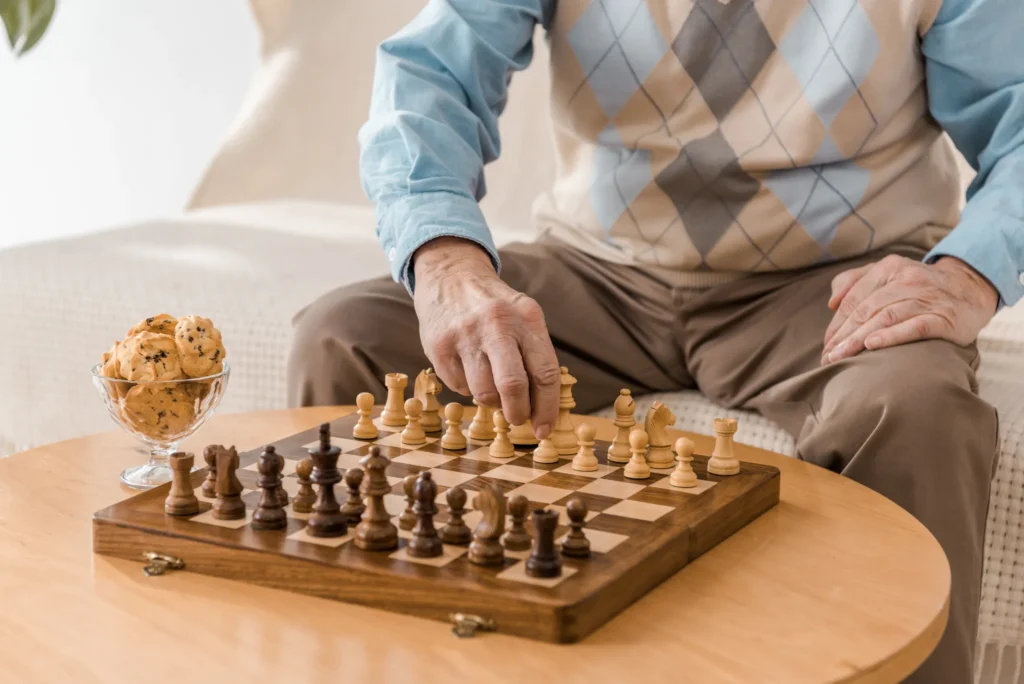
At Cura, we see it all the time. Someone moves in, a little uncertain, maybe a little withdrawn. Then one day, they’re leading the charge at trivia night, correcting everyone’s answers with the smug precision of a former Jeopardy addict. And just like that, they’re back. Not just present, but sharp.
Brain games and lifelong learning aren’t a cure-all, but they’re a powerful part of aging well, especially when they’re woven into daily life, not treated like a chore. The science backs this up. So does our experience. But maybe more importantly, so do the smiles (and the occasional trash talk during Scrabble).
What Aging Does to the Brain
Let’s start with what’s normal. As we age, it’s common to misplace a name or forget why we walked into a room. That doesn’t mean cognitive decline. It just means the brain, like every other part of the body, isn’t running quite as fast as it used to. Processing speed slows. Multitasking gets clumsy. But reasoning, vocabulary, and long-term memory? Those stay strong.
And here’s the good news. According to the National Institute on Aging, engaging the brain regularly, especially in novel, challenging ways, can help maintain cognitive performance over time. In some cases, it can even reduce the risk of more serious issues like mild cognitive impairment or memory loss.
So, Do Brain Games Actually Work?
Research shows that certain types of brain games and mental exercises can improve specific cognitive functions like working memory, attention, and executive function. But not all games are created equal.
The flashy online games that promise to “rewire your brain in two weeks” usually don’t live up to the hype. But crossword puzzles, trivia games, logic puzzles, and memory games, especially when done consistently, can absolutely challenge the brain in meaningful ways.
At Cura, we’ve found that the games that work best are the ones that feel more like play than therapy. Residents are more likely to stick with what they enjoy. And when enjoyment leads to routine, that’s when the benefits really start to show.
The Best Brain Games for Seniors Aren’t Always on a Screen
Plenty of digital platforms offer cognitive training tools. Some are useful. Many are overpriced. But the classics haven’t gone out of style.
Crossword puzzles boost vocabulary and retrieval. Sudoku sharpens pattern recognition and logic. Trivia games flex recall, attention to detail, and long-term memory. Card games and board games require strategic thinking, number skills, and interpersonal interaction; bonus points when they spark competition.
Group play adds an extra layer of challenge: responding quickly, reading cues, and navigating the delightful chaos of a room full of opinionated players. That’s brain training in disguise.
Learning New Things Isn’t Just for the Young
Lifelong learning does something games can’t: it stretches the brain in unpredictable directions. Learning a new language, trying a new recipe, picking up an instrument, or joining a history lecture series. These are all complex tasks that demand coordination across multiple brain regions.
And the benefits of lifelong learning aren’t just cognitive. It strengthens identity, boosts confidence, and gives people something to look forward to. We’ve seen residents light up when they finally crack the basics of Yiddish or paint their first landscape, decades after they last held a brush.
Everyday Activities That Boost Brain Health
Not everything has to be formal. Plenty of brain-healthy habits are built into daily life. For instance, reading a book (and talking about it), or telling stories to the grandkids. Planning a grocery list. Mapping out a walking route. Switching up routines. Even brushing your teeth with your non-dominant hand gives the brain a mini workout. The trick is variety. Routines are comforting, but novelty is what keeps neurons on their toes.
Why Movement Matters Just as Much
Let’s not forget: a sharp brain needs a strong body. Staying physically active improves blood flow, reduces inflammation, and supports mood, all of which contribute to cognitive function.
Activities that mix movement with mental focus, like dancing, yoga, or walking while recalling a story, are especially powerful. We call it “whole-person exercise,” and it’s one of the reasons Cura builds so many opportunities for integrated wellness into our weekly routines.
How Often Is Often Enough?
Consistency beats intensity. A little bit, most days, is better than a full hour once a month. For most older adults, doing brain games or learning-focused activities several times a week is enough to see benefits over time. And no, you don’t need to sit in a classroom or stare at a screen for hours. A crossword over coffee, a game of cards after dinner, a cooking class once a week. It all counts.
Learning Works Better When It’s Social
Some of the best cognitive workouts happen in community settings. Conversation requires attention, memory, and flexibility. Disagreeing politely during a book club takes more mental effort than you’d think. Add in laughter, and now you’ve got endorphins working for you too.
Social learning, like language classes, creative writing workshops, or group discussion circles, keeps minds alert and relationships strong. That’s why Cura emphasizes both independent and group learning opportunities across our communities. The simple fact is that brains do better when they’re in community.
What Families Should Know About Brain Health in Senior Living
Choosing a community for an aging parent or loved one isn’t just about safety or medical care. It’s about finding a place that honors who they are, including their curiosity, wit, and need to keep growing.
At Cura Living, we know cognitive wellness isn’t a box to check. It’s part of the culture. From brain games and learning activities to conversations over lunch, we create spaces where staying sharp feels natural, not forced. We’re not just caring for bodies, we’re caring for minds.
Looking for a Place That Supports Brain Health and Lifelong Learning?
If you’re searching for a community where your loved one can do more than just pass the time, where they can stay mentally active, socially connected, and intellectually engaged, let’s talk. We’d love to show you how Cura Living helps residents feel not just safe, but seen. Not just supported, but stimulated.
Reach out to schedule a visit or ask questions. We’ll give you a real answer, not a pitch. Because caring for someone’s mind starts with understanding their story. We’re ready to listen.