
Families searching for senior living usually carry the same worry underneath every question: Will someone they love lose their independence after moving? It’s a fair concern, but independence is not defined by remaining alone in a house that has become too big, too quiet or too difficult to maintain. Here’s what can happen to someone’s freedom when the daily demands of home maintenance are lifted.
What Independence Can Look Like After the Move
Independence in senior living means having the energy and support to do the things that matter. Residents can spend more time on hobbies, friendships and wellness while chores and other daily responsibilities are handled by an experienced team. With cooking, laundry and household maintenance taken care of, residents can focus more of their time on the people and activities they enjoy.
That might mean:
- Having morning coffee with the same group of friends
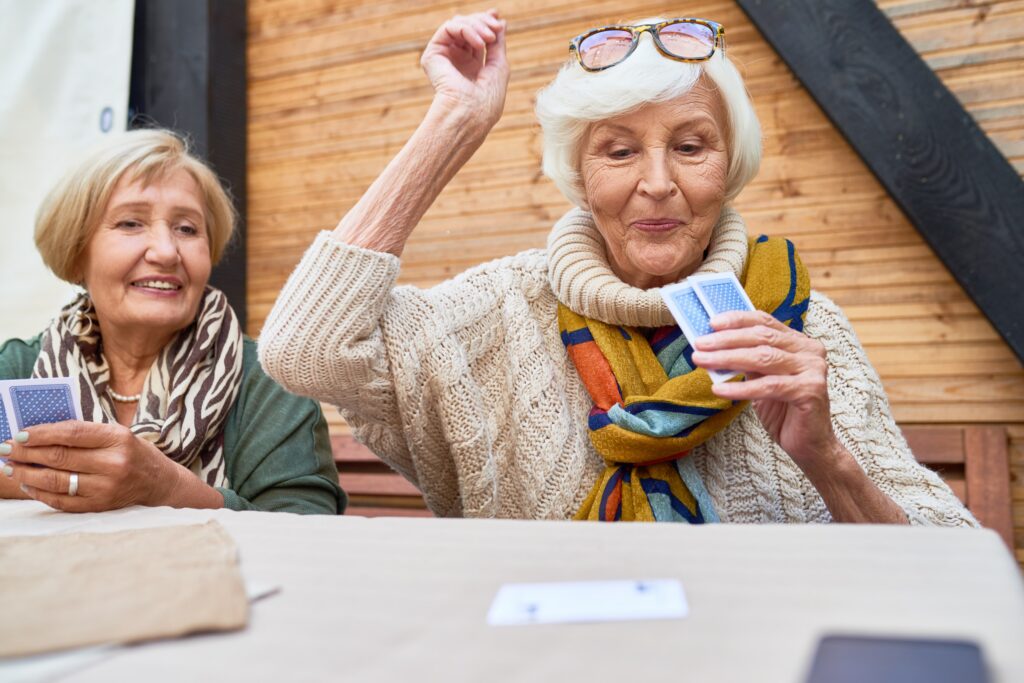
- Enjoying cards, a walk or an art class
- Sharing meals with friends and neighbors
Physical Wellness
Managing health alone gets harder with time. Having the right support nearby can change that picture. Trained team members can help with daily tasks such as bathing, dressing and medication management while catching small issues before they become emergencies. Nutritious, well-prepared meals can replace the skipped or simplified meals that often become common when cooking for one begins to feel like too much.
That kind of care protects independence. Feeling steady gives residents the confidence to continue doing what they want to do instead of pulling back out of fear that something might go wrong with no one nearby.
Social Wellness
Physical risks are often noticed first—a fall, a missed medication or a stove left on. What can be harder to recognize is a gradual progression toward social isolation: fewer friends nearby, fewer reasons to leave the house and fewer people checking in.
That erosion is significant. According to research, social isolation is linked to roughly a 50% higher risk of dementia in older adults, along with a 29% higher risk of heart disease and a 32% higher risk of stroke. Isolated older adults are also less likely to keep medical appointments, remain active or eat well.
Social wellness not only supports health but also provides the type of independence many older adults value most. Relationships and a sense of belonging are often central to what people want from this stage of life. Community life rebuilds that social fabric in ways that are difficult to create alone:
- Shared meals turn eating from a task into an occasion — They provide a reason to get dressed, show up and linger over coffee.
- Everyday connection — A conversation with a neighbor or a friend saving a seat at trivia allows relationships to grow naturally, without requiring someone to plan every interaction.
- Group activities — These create natural, repeated opportunities to connect rather than relying on family calls as the only consistent source of social contact.
Mental Wellness
Routine makes freedom usable. A predictable rhythm to the day can do more for older adults than many families expect. Knowing that breakfast happens at a certain time, Tuesday brings the walking group or someone will check in during the afternoon provides helpful structure. It reduces the mental load of planning each day from scratch and leaves more energy for the decisions and experiences that make the day enjoyable.
Frequently Asked Questions
Does senior living take away a person’s independence?
No. For most residents, it restores time and energy that daily chores were consuming. Housekeeping, meals and maintenance are handled, freeing residents to spend their days on relationships, hobbies and activities they choose rather than tasks they simply have to complete.
How does social isolation affect older adults’ health?
Isolation is linked to a roughly 50% higher risk of dementia and higher rates of heart disease, stroke, depression and premature death, according to research. Isolated older adults are also less likely to remain active, eat well or keep up with medical care because there may be no one nearby to encourage those habits.
How do I know if my parent is lonely?
Loneliness can appear as a declining interest in activities someone once enjoyed, skipped meals or less contact with friends. If visits or calls have become the only social interaction in your parent’s week, it may be worth taking a closer look, even if everything else seems fine.
For many older adults, freedom means having the energy, time and relationships to make each day feel like their own. Curious what that looks like in everyday life? Schedule a tour at a Cura Living community and experience it in person.